 ArdenAlgo
Premium & discount
- Split the H4 dealing range at its midpoint: upper half premium, lower half discount.
- Bias needs three things at once: structure, range position, and untapped liquidity ahead.
- Longs only from discount, shorts only from premium — 'no bias' is a position, and the engine holds it often.
What it is
Take the current H4 dealing range — the span between the last significant swing low and high — and split it at the midpoint. The upper half is premium (expensive), the lower half is discount (cheap). The idea is old market-making logic: buy where it's cheap relative to the range, sell where it's expensive.
The exact engine rule
Why "no bias" is a position
The most expensive habit in trading is manufacturing setups in the middle of a range. Encoding location as a hard filter means the engine simply goes quiet when conditions are mediocre — which is also why our signal counts look sparse next to services that alert hourly. Sparse is the point.
Common misuse
Redrawing the range until the trade you already wanted lands in the "right" half. The engine's range is computed from confirmed swings with fixed rules — it can be wrong, but it can't be negotiated with.
Common questions
Why does the engine go quiet for days?
Because location is a hard filter. When structure, range position and a target don't align, bias is none and nothing is hunted. Sparse is the point.
Can the dealing range be redrawn to fit a trade?
Not here — the range comes from confirmed swings with fixed rules. It can be wrong, but it can't be negotiated with.
Is premium/discount a prediction?
No. It's old market-making logic encoded as a filter: buy cheap relative to the range, sell expensive — and never trade against your side of it.
On real charts — marked vs. left alone
Below: the engine's own markings, captured from our TradingView indicator on live charts — screenshots, not illustrations. The second frame in each pair is the one nobody in this category publishes: a candidate that looks like the pattern and gets no mark, because it misses a threshold above. Rules are only testable if their failures are visible too.
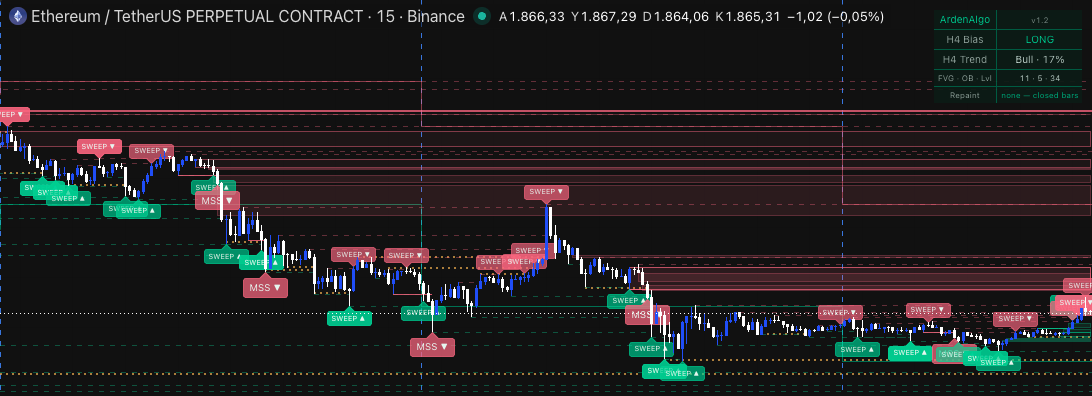
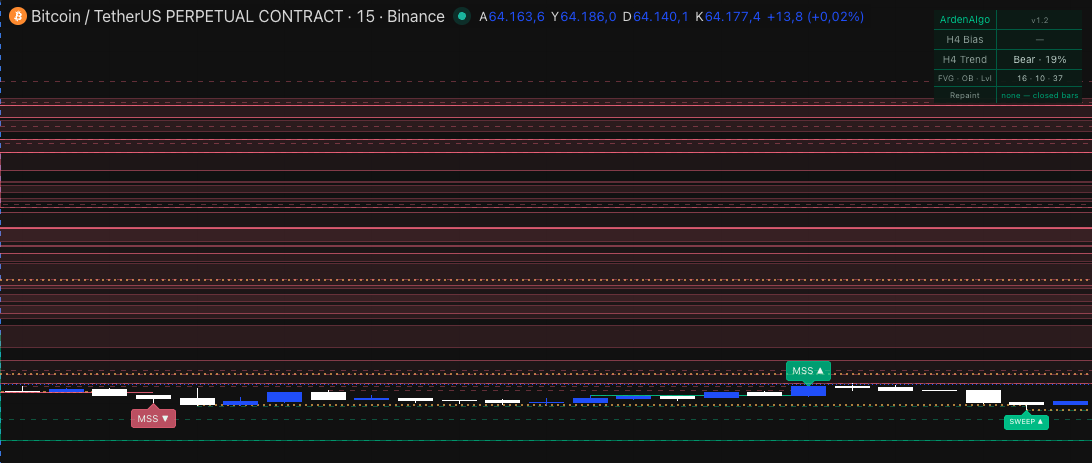
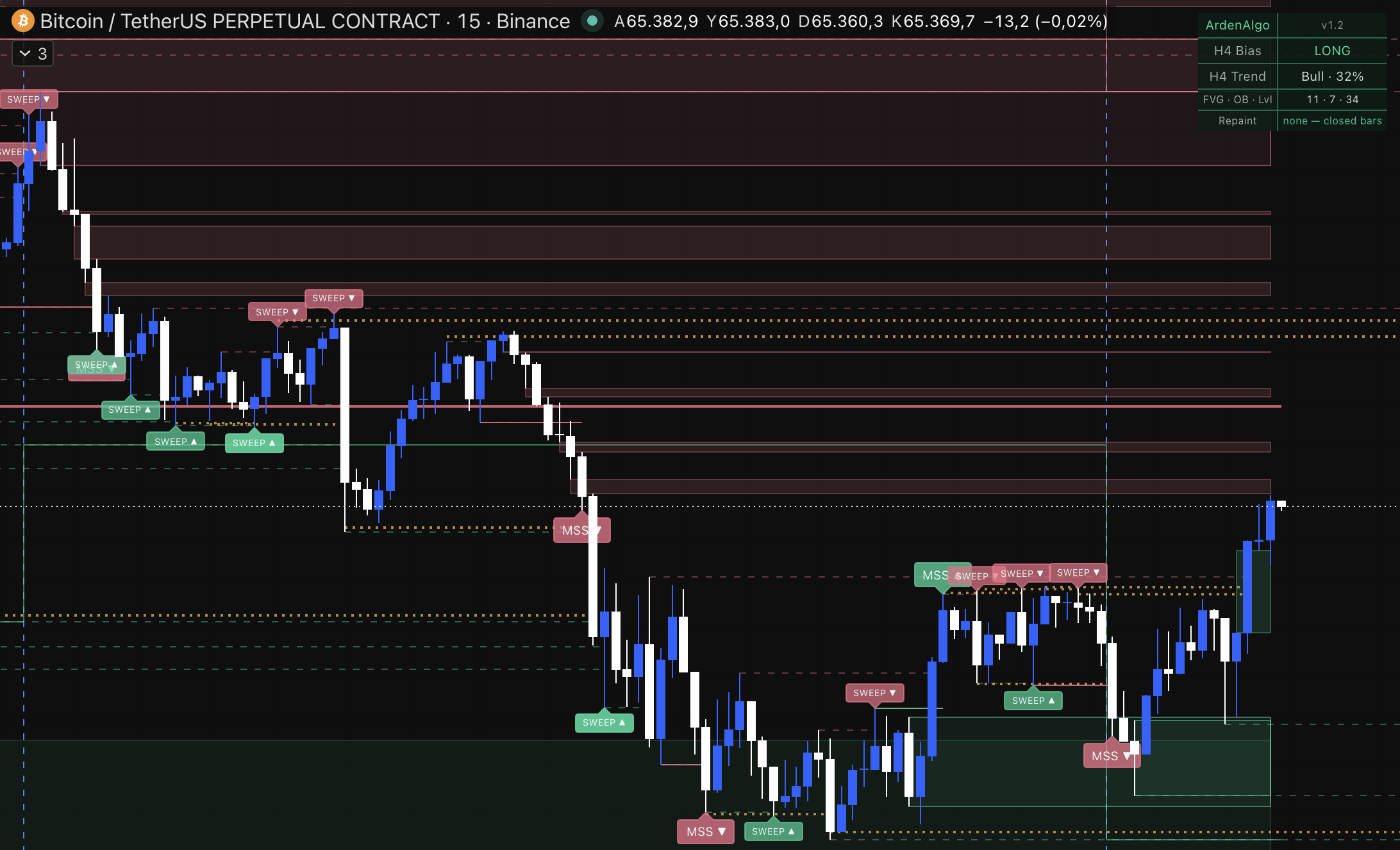
Wider view of the same indicator on a live chart.
Related
Liquidity map · Order block · Full methodology
Joining locks the launch rate before the evaluation verdict is out — and gets you two mails, ever: launch + the verdict, whichever way it goes.