 ArdenAlgo
Liquidity sweep
- A sweep is a wick beyond a mapped level with the body closing back on the original side — on a closed 15-minute bar.
- Body closes beyond the level = a run (genuine break); the engine deliberately ignores it.
- A sweep alone triggers nothing: it arms a 16-bar window in which structure must answer.
What it is
Price pushes through a mapped level just far enough to trigger the stops resting behind it, then closes back on the original side. The liquidity is taken; the breakout never materializes. That rejection — not the poke itself — is the event.
The exact engine rule
Why the closed bar matters
Mid-bar, every sweep looks like a breakout and every breakout looks like a sweep. The distinction only exists at the close. Tools that label sweeps intrabar are guessing, then quietly relabeling — which is exactly the repaint behavior this engine was built to make impossible.
Common misuse
Calling any long wick a "sweep". Without a mapped level behind it, a wick is just volatility. And without the body-close-back condition, you are trading against a breakout, not with a rejection.
Common questions
Is every long wick a sweep?
No. Without a mapped, untapped level behind it, a wick is just volatility. The level must exist before the event.
Why does the closed bar matter so much?
Mid-bar, a sweep and a breakout are literally the same picture. The distinction only exists at the close — which is why intrabar sweep labels repaint.
What happens after a sweep?
The confirmation clock starts: the last opposing swing must break by body close, with displacement, within 16 bars — otherwise the sequence resets.
On real charts — marked vs. left alone
Below: the engine's own markings, captured from our TradingView indicator on live charts — screenshots, not illustrations. The second frame in each pair is the one nobody in this category publishes: a candidate that looks like the pattern and gets no mark, because it misses a threshold above. Rules are only testable if their failures are visible too.
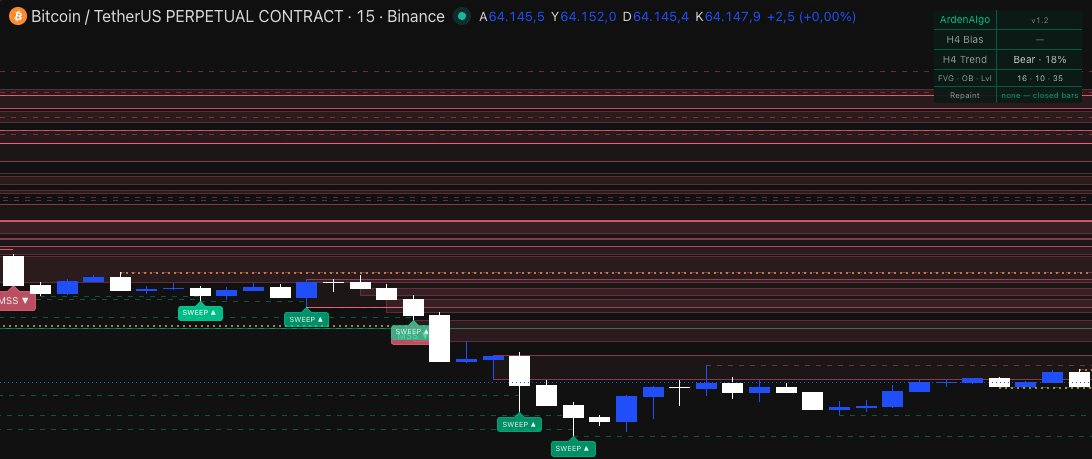
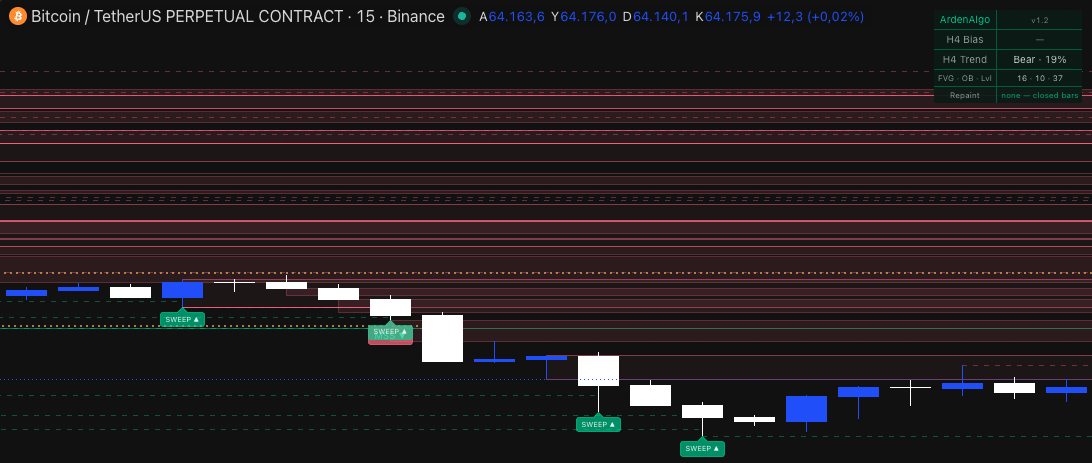
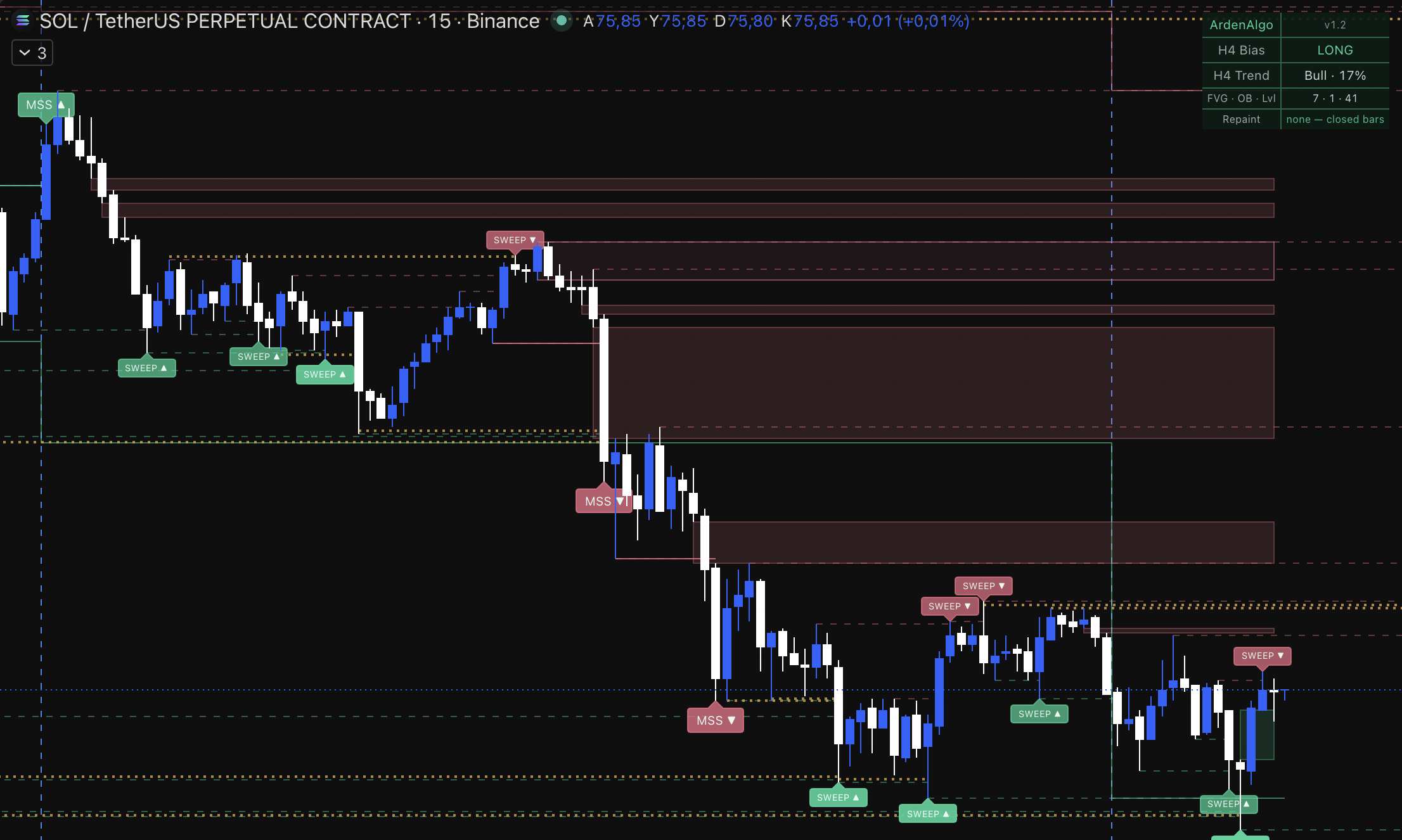
Wider view of the same indicator on a live chart.
Related
Liquidity map · Market structure shift · Full methodology
Joining locks the launch rate before the evaluation verdict is out — and gets you two mails, ever: launch + the verdict, whichever way it goes.